













Standard and Custom CNC Cutting Tools for Different Needs
Standard CNC cutting tools are widely used in machining because they are practical, efficient, and suitable for many common operations. For routine threading, milling, drilling, and hole-making tasks, standard tools can often meet production needs while keeping purchasing and replacement convenient. They are a good choice for factories that require stable supply and fast application in common machining work.
However, not all machining conditions can be solved with standard tools alone. In real production, factories often face special materials, unusual dimensions, deep holes, limited tool paths, or performance requirements that standard products cannot fully match. In these situations, custom CNC cutting tools become an important solution.
Custom taps, end mills, and drills can be designed according to the workpiece material, machining condition, and dimensional requirement. This allows the tool to better match the real application, improving cutting efficiency, reducing breakage, and solving repeated machining problems. For example, if a standard drill cannot provide the required hole quality, or if a standard end mill creates unstable cutting in a special profile, a custom tool may offer much better results.
The decision between standard and custom tools should not be based only on initial price. It should be based on total machining value. Standard tools are excellent for common production needs, while custom tools are more suitable when application matching, stability, or productivity becomes more important.
For manufacturers, the best tooling strategy is often a balanced one. Standard CNC cutting tools support daily production efficiently, while custom tools solve more demanding machining challenges. Choosing the right combination helps factories improve process reliability, increase efficiency, and achieve better overall production results.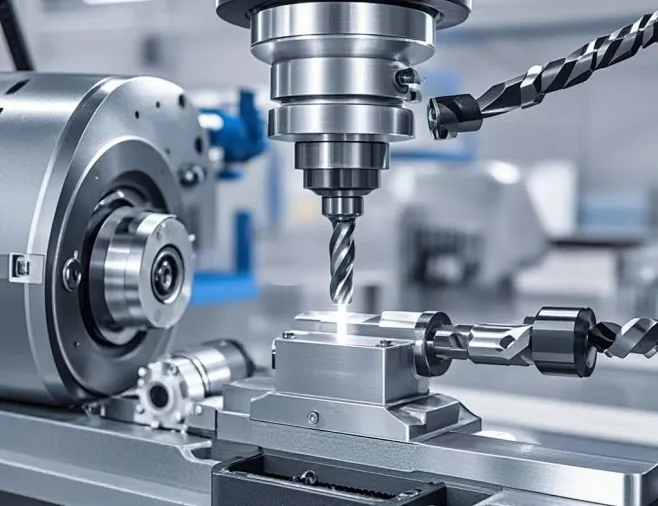
 `
`
 `
`
 `
`
 `
`